AI agents trading use sentiment analysis
AI agents trading has evolved significantly with the incorporation of advanced technologies, and one of the most promising techniques that these systems can leverage is sentiment analysis. Sentiment analysis involves evaluating textual data from news sources, social media, financial reports, and other channels to gauge the market sentiment—whether it is bullish, bearish, or neutral. The question of whether AI agents trading can use sentiment analysis has a clear affirmative answer, and the combination of these two technologies is reshaping how market participants approach trading decisions.
Sentiment analysis provides AI agents trading systems with an additional layer of information beyond traditional numerical market data like prices, volumes, and technical indicators. By analyzing public opinion and emotions expressed in real time, AI agents can gain insights into how traders, investors, and the broader public are reacting to news events, earnings reports, geopolitical developments, and other market-moving information. This qualitative data helps AI agents forecast potential market movements more accurately by understanding the psychological factors behind price changes.
For example, an AI agent trading system can process thousands of tweets, news headlines, and financial articles every minute to detect shifts in sentiment around a particular stock, commodity, or index. If the sentiment suddenly turns negative due to unfavorable news, the AI agent might decide to reduce exposure, hedge positions, or even initiate short selling. Conversely, positive sentiment spikes could trigger buying strategies. This ability to quickly interpret and react to sentiment data offers a competitive edge, as human traders would struggle to keep pace with the sheer volume and velocity of information.
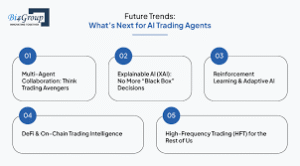
Can AI agents trading use sentiment analysis?
The integration of sentiment analysis into AI agents trading relies on natural language processing (NLP) techniques. These techniques allow the AI to understand context, irony, and subtleties in language, making the sentiment scoring more reliable and nuanced. Modern NLP models, including transformer-based architectures, have significantly improved the accuracy of sentiment classification, enabling AI agents to differentiate between genuine market-moving news and noise or irrelevant chatter.
Additionally, sentiment analysis can be combined with other data sources to create hybrid models in AI agents trading. For instance, an AI agent might weigh technical indicators alongside sentiment scores and macroeconomic data to make more informed trading decisions. This multi-dimensional approach increases the robustness of trading strategies and reduces the risk of relying on a single source of information.
However, there are challenges when using sentiment analysis in AI agents trading. Sentiment can be highly volatile and sometimes misleading, especially during periods of market manipulation, misinformation, or speculative hype. Ensuring data quality and filtering out noise is crucial for AI agents to avoid false signals. Moreover, sentiment trends may differ across markets, sectors, or asset classes, requiring specialized tuning and continuous adaptation of the models.
In conclusion, AI agents trading can indeed use sentiment analysis effectively to enhance decision-making and improve trading performance. By leveraging advances in NLP and big data analytics, AI agents gain access to real-time sentiment insights that complement traditional market data. While challenges remain in accurately interpreting sentiment and integrating it with other factors, the fusion of AI agents trading and sentiment analysis is already proving to be a valuable innovation in the fast-paced world of financial markets.